Remarkable Trees of the World

Most trees are anonymous. A few have names, and with the names come fences, support cables, tourist traffic, and entries in national registers. This post surveys twelve: the oldest, the largest, the most isolated, and the most photographed, including three that are dead—one by truck, one by tunnel, one by climate.
The selection is not systematic. These are simply the ones I find most interesting, with notes on what distinguishes each and how to see it.
The Trees
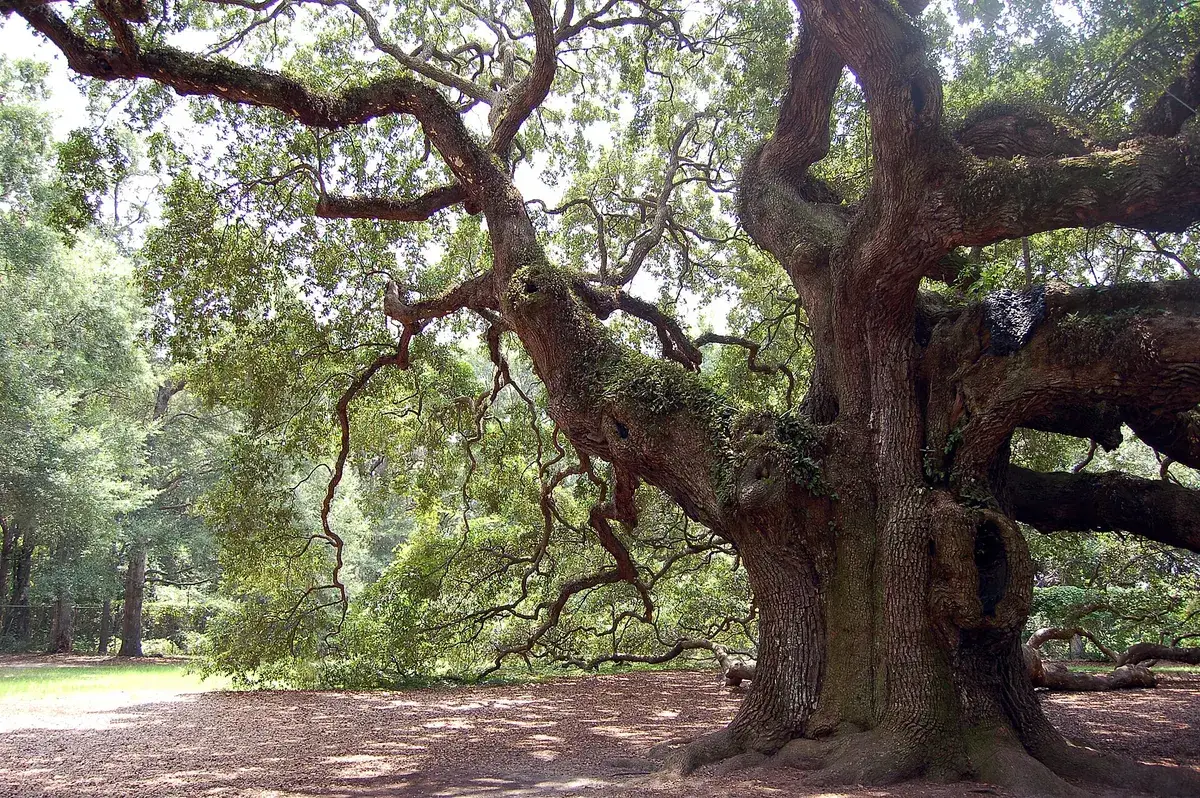
The Angel Oak — Johns Island, South Carolina
A Southern live oak (Quercus virginiana) estimated between 400 and 500 years old. Its branches spread outward rather than upward, creating a canopy covering nearly 17,000 square feet. Some limbs extend 187 feet from tip to tip. Many touch the ground and rise again.
What makes it remarkable: This is the live oak at its architectural extreme: a tree that grows sideways and treats gravity as a suggestion. The branches are held up by cables and braces now, a joint venture between tree and engineering.
Visiting: Free, though a $10 donation is suggested. On Johns Island, 20 minutes from Charleston. Best photographed in early morning before crowds.
The Lone Cypress — Pebble Beach, California
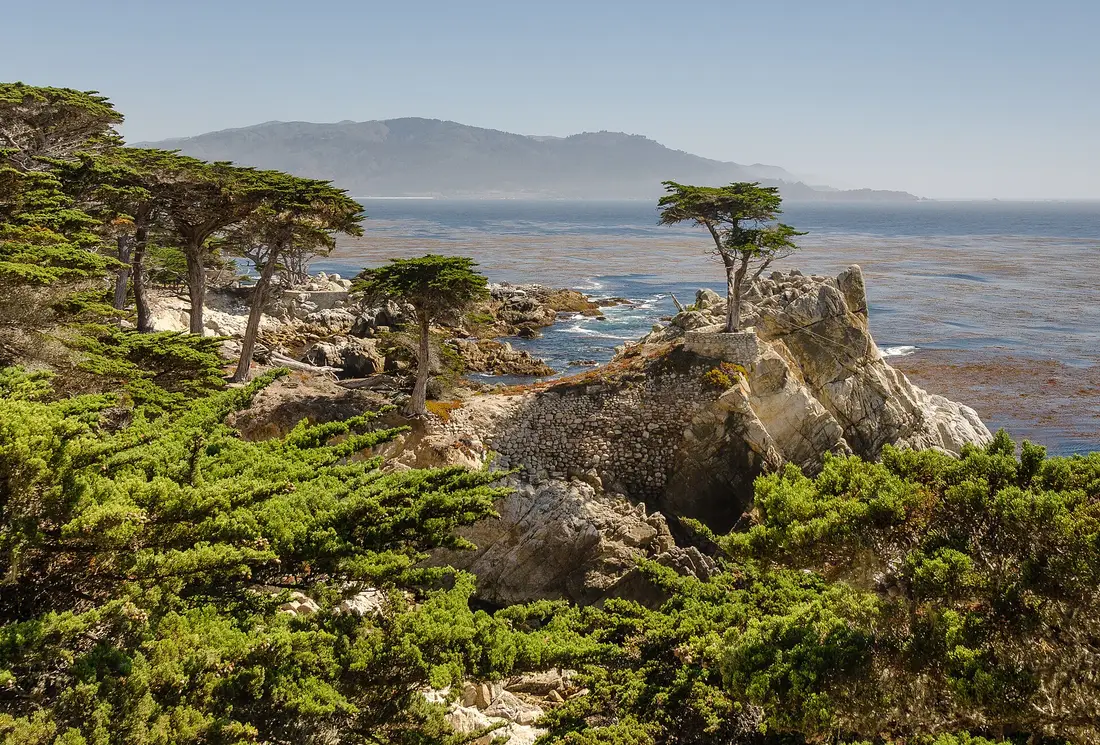 Photo: Tuxyso, CC BY-SA 3.0

A Monterey cypress (Hesperocyparis macrocarpa) on a granite outcrop above Carmel Bay. Estimated age: 250 years. The Pebble Beach Company has trademarked its image for commercial use—few trees employ lawyers.
What makes it remarkable: The tree is dying, slowly, and has been for decades. Support cables hold up the major branches. It is not the most beautiful cypress, nor the oldest, but its isolation on that rock, framed against the Pacific, makes it hard to photograph badly.
Visiting: Visible from 17-Mile Drive (currently $12.25 per car). The tree itself is fenced off.
Methuselah — White Mountains, California
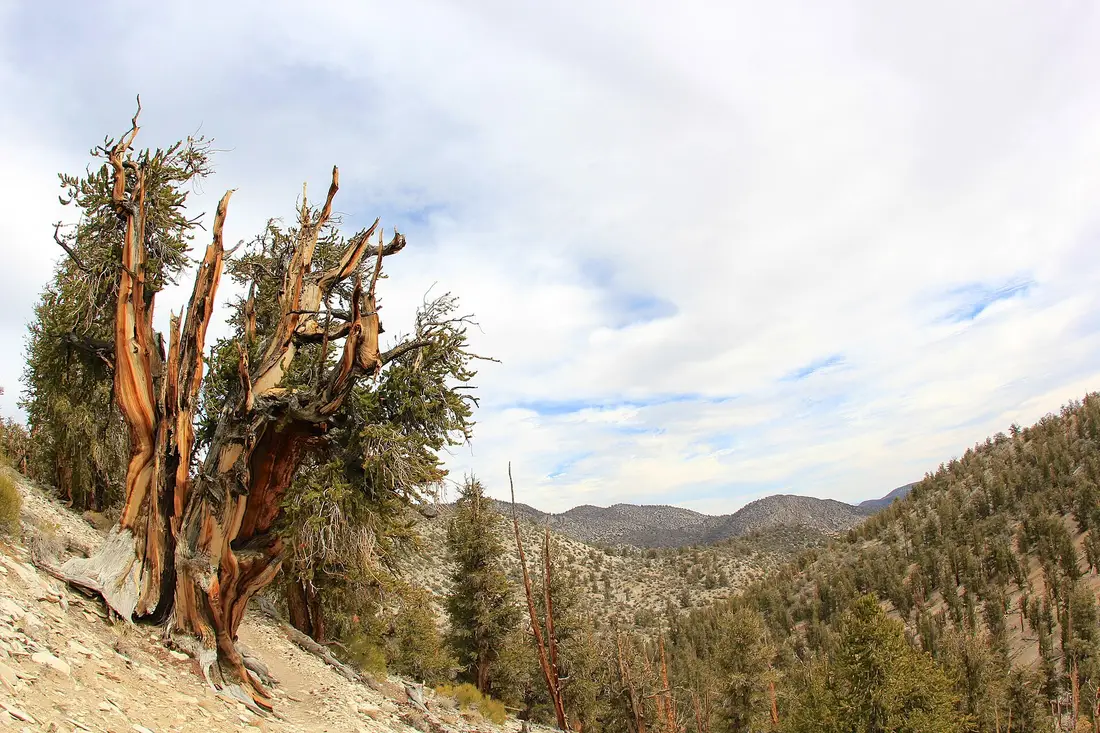 A bristlecone in the White Mountains—possibly Methuselah; the Forest Service is not saying. Photo: daveynin, CC BY 2.0

A Great Basin bristlecone pine (Pinus longaeva) confirmed at 4,855 years old by core sample in 1957. The oldest known non-clonal tree in the world. Its exact location is a secret kept by the U.S. Forest Service.
What makes it remarkable: Methuselah was a seedling when the pyramids of Giza were under construction. It grows in conditions—high altitude, dolomite soil, minimal moisture—that would kill most trees but that paradoxically preserve bristlecones by slowing growth to an imperceptible rate.
Visiting: You can walk through the Methuselah Grove in the Ancient Bristlecone Pine Forest and will see Methuselah, but you won’t know which tree it is. That anonymity is the point.
Note: An older bristlecone (5,069 years) was discovered in 2012 but remains unnamed and unlocated publicly.
Jaya — Borneo, Malaysia
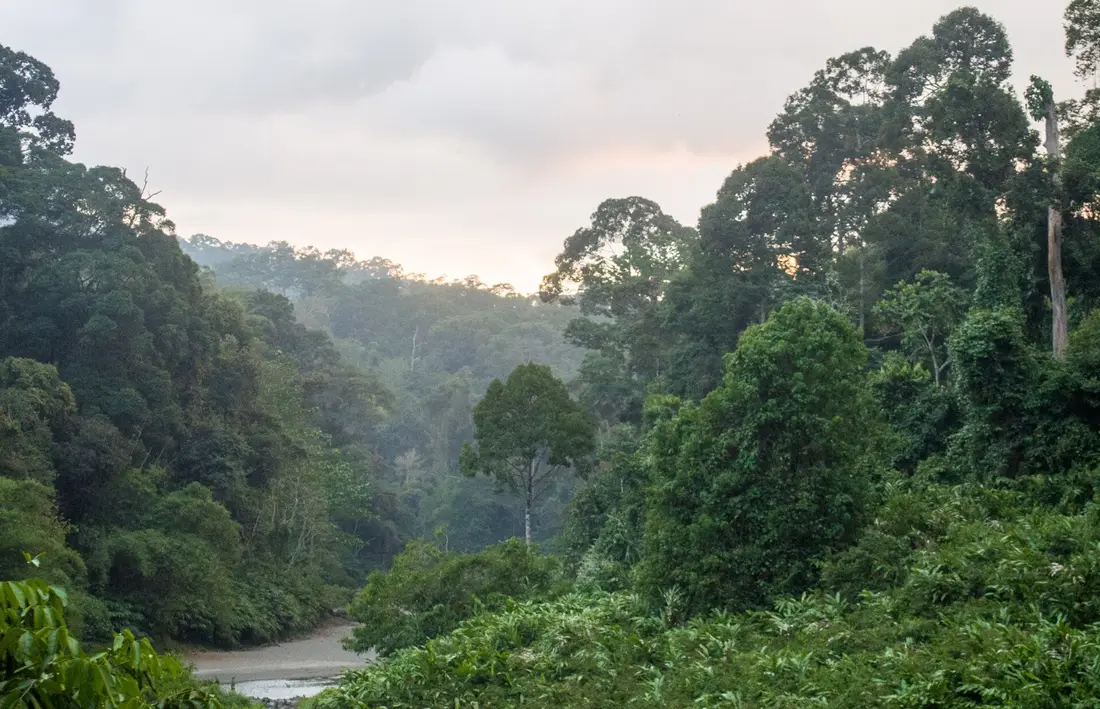 Emergent dipterocarps above the canopy, Danum Valley. Photo: Mike Prince, CC BY 2.0
.jpg)
A yellow meranti (Shorea faguetiana) measured at 100.8 meters (330.7 feet), making it the tallest known tropical tree in the world. Located in Sabah, Malaysian Borneo.
What makes it remarkable: Tropical trees were long assumed to top out well below temperate conifers. Jaya, found in 2019 by LiDAR survey, disproved this. It is impossible to photograph in full: either you are so far away that the forest swallows it, or you are beneath it, looking up at a column that vanishes into canopy.
Visiting: Within the Danum Valley Conservation Area. Access requires arrangements through the Sabah Parks system.
The Tree of Ténéré — Formerly Niger
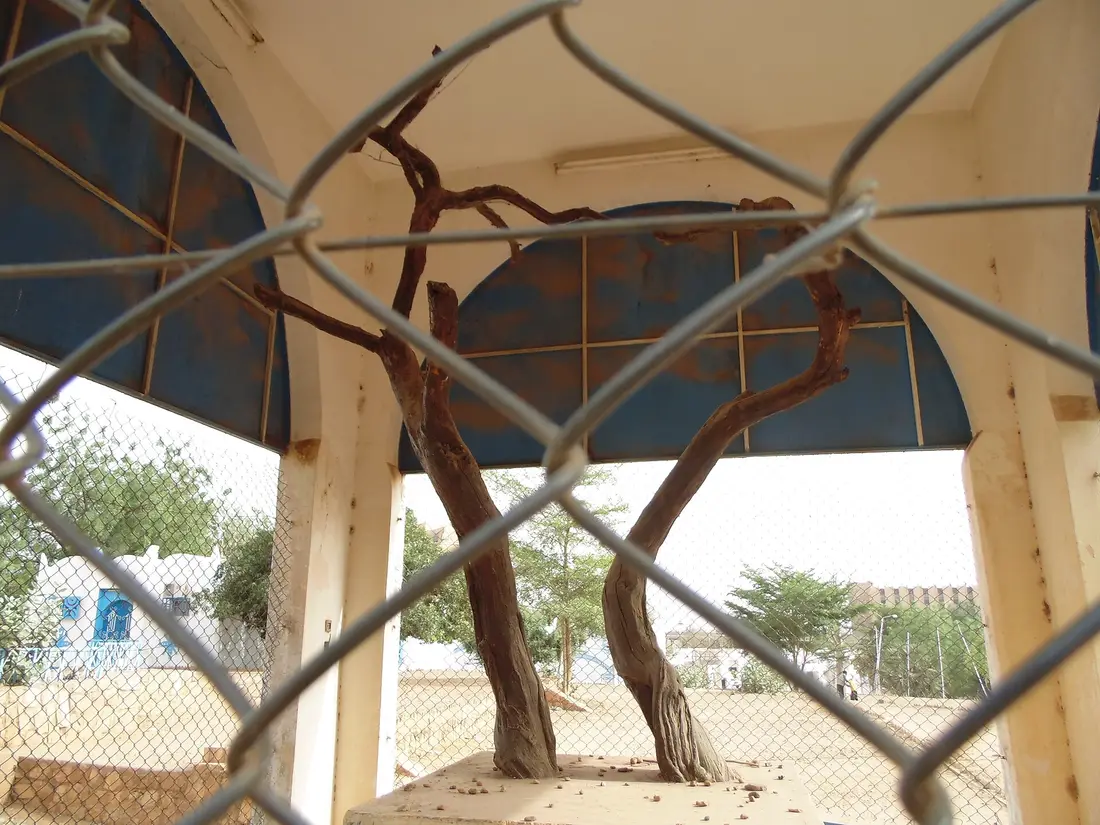 What remains of the Tree of Ténéré, at the Niger National Museum in Niamey. Photo: Amadouibrahim2, CC BY-SA 4.0

A solitary acacia (Vachellia tortilis) that stood in the Sahara Desert of northeastern Niger, the only tree for 250 miles in any direction. It was used as a landmark on caravan routes for centuries. In 1973, a reportedly drunk truck driver hit it. The tree died.
What makes it remarkable: The Tree of Ténéré is famous for its absence. It was the most isolated tree in the world, surviving where nothing should survive, its roots reaching an underground water source 30+ meters deep. Its destruction was so improbable—the only solid object for hundreds of miles, struck by the only vehicle—that it reads as parable.
What remains: A metal sculpture marks the site. The original dead tree was moved to the Niger National Museum in Niamey.
Árbol del Tule — Oaxaca, Mexico
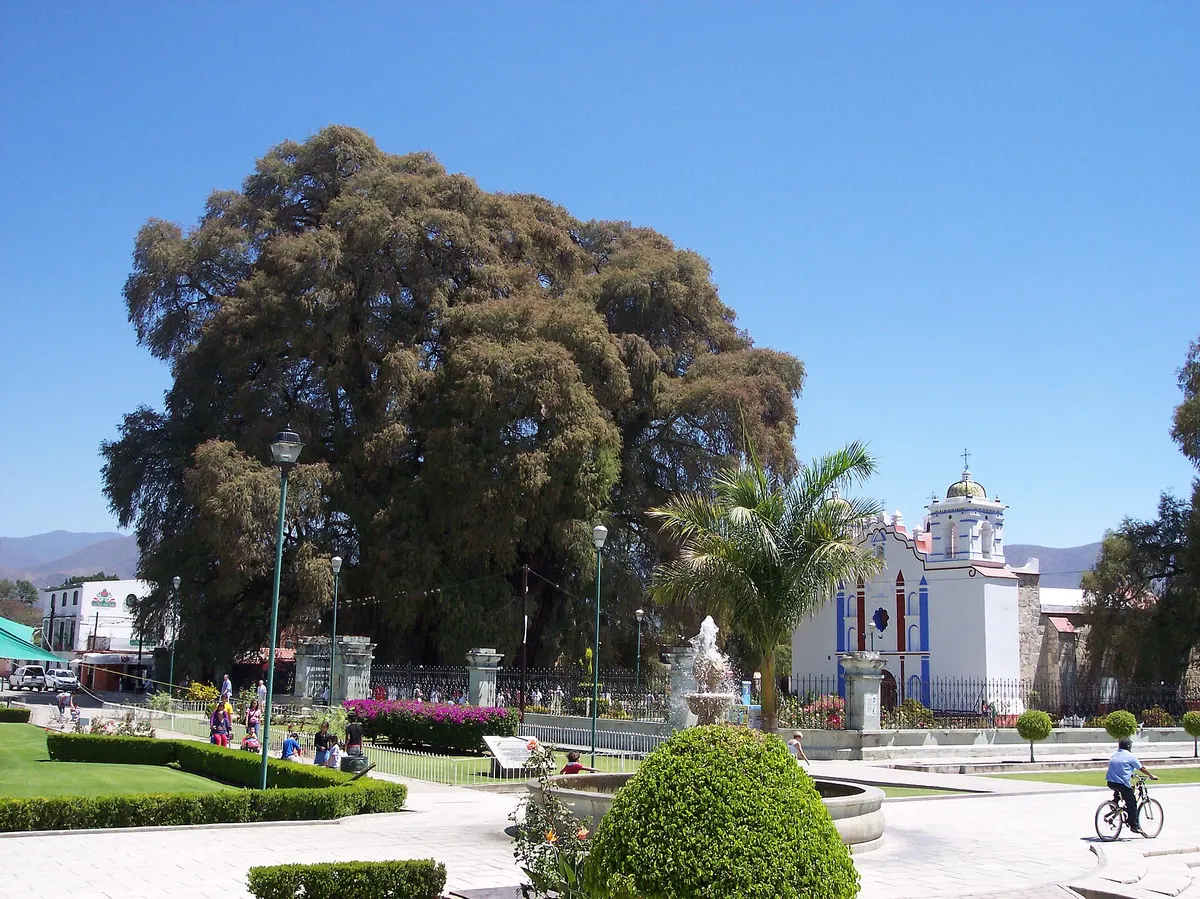 Photo: Gengiskanhg, CC BY-SA 3.0

A Montezuma cypress (Taxodium mucronatum) in the town of Santa María del Tule. It has the largest trunk diameter of any tree in the world: 14.05 meters (46.1 feet). Estimated age: 1,500-3,000 years.
What makes it remarkable: The trunk is so massive and convoluted that early observers believed it must be multiple trees fused together. DNA testing confirmed it’s a single organism. Locals identify shapes in the bark—a jaguar, an elephant, a lion—and guides will point them out for tips.
Visiting: In the churchyard of a village 9 km from Oaxaca city. The tree is fenced but easily viewed. There’s a small admission charge.
The Major Oak — Sherwood Forest, England
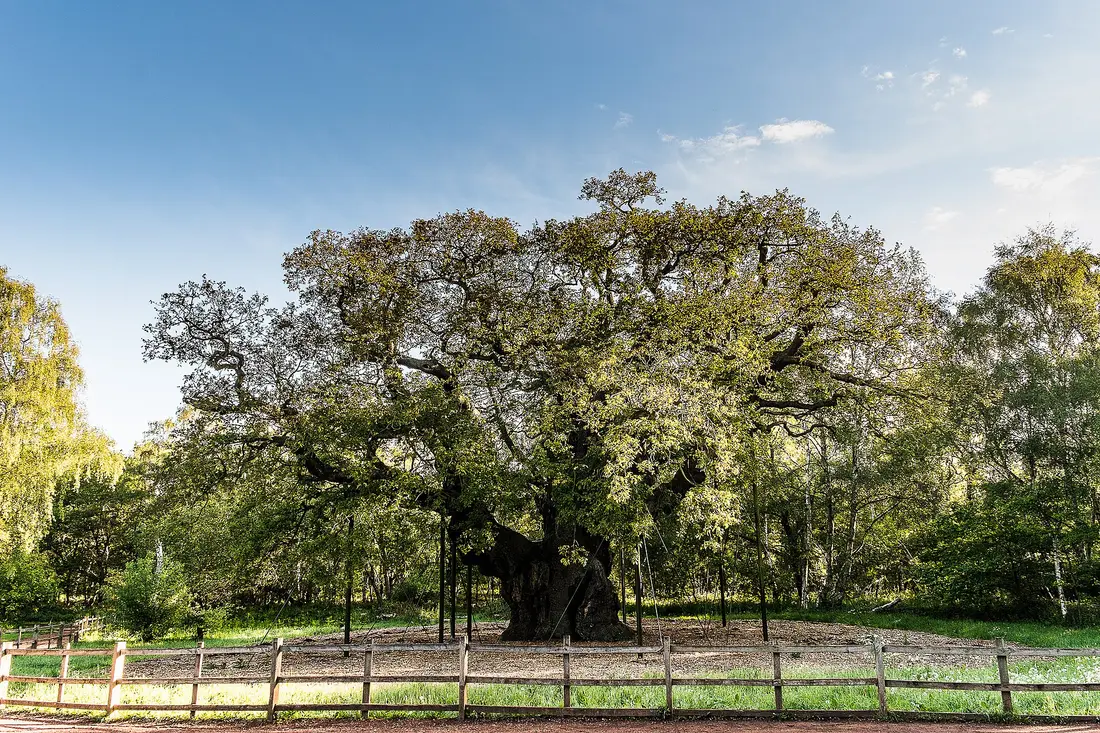 Photo: Ema Lee, CC BY-SA 4.0

An English oak (Quercus robur) in Sherwood Forest, Nottinghamshire. Estimated age: 800-1,100 years. Trunk circumference: 10.7 meters. The tree is held together by an extensive system of steel poles and cables.
What makes it remarkable: Legend, not history, associates it with Robin Hood; the tree is genuinely medieval all the same. It is also in obvious decline—hollow-trunked, propped up by steel, its lowest branches resting on crutches. A visit feels like calling on an elderly relative: you go because it is still there, not because it is thriving.
Visiting: Free, though parking charges apply. The tree is fenced off but visible from close range.
Wawona Tunnel Tree — Formerly Yosemite, California
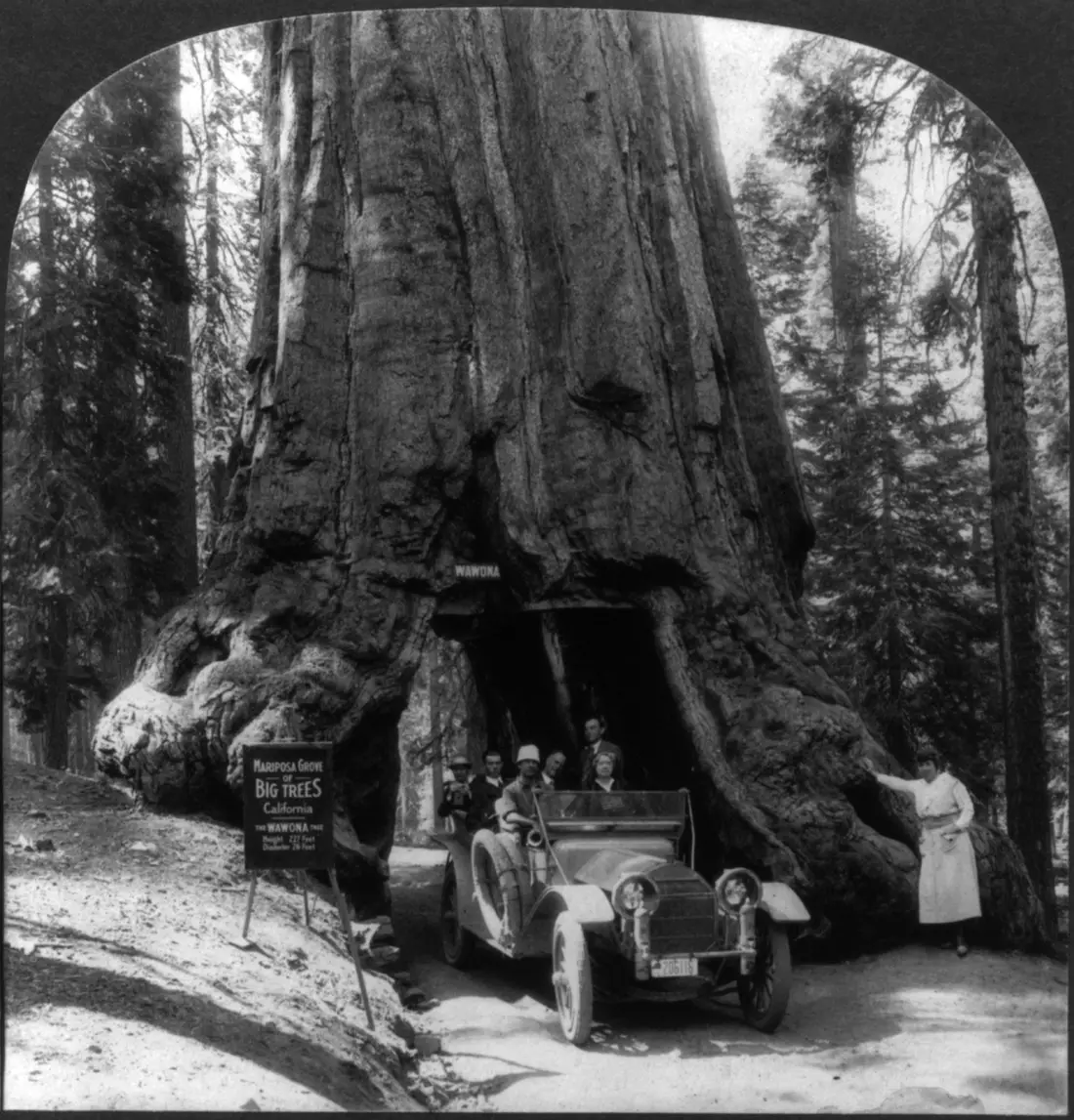 The Wawona Tree in its drive-through years. Photo: Keystone View Co., public domain

A giant sequoia (Sequoiadendron giganteum) that had a tunnel carved through its base in 1881 to allow carriages (and later cars) to pass through. It fell in 1969 under heavy snow load, its structure weakened by the tunnel.
What makes it remarkable: The Wawona Tree belongs to a particular phase of America’s relationship with nature, when the natural response to a 2,000-year-old tree was to drive a car through it. The tunnel was cut for tourism; the tourism, eventually, killed the tree. It fell during a winter storm, with no witnesses.
What remains: The fallen trunk is still there, slowly decomposing. Other drive-through trees remain in private groves outside the park.
General Sherman — Sequoia National Park, California
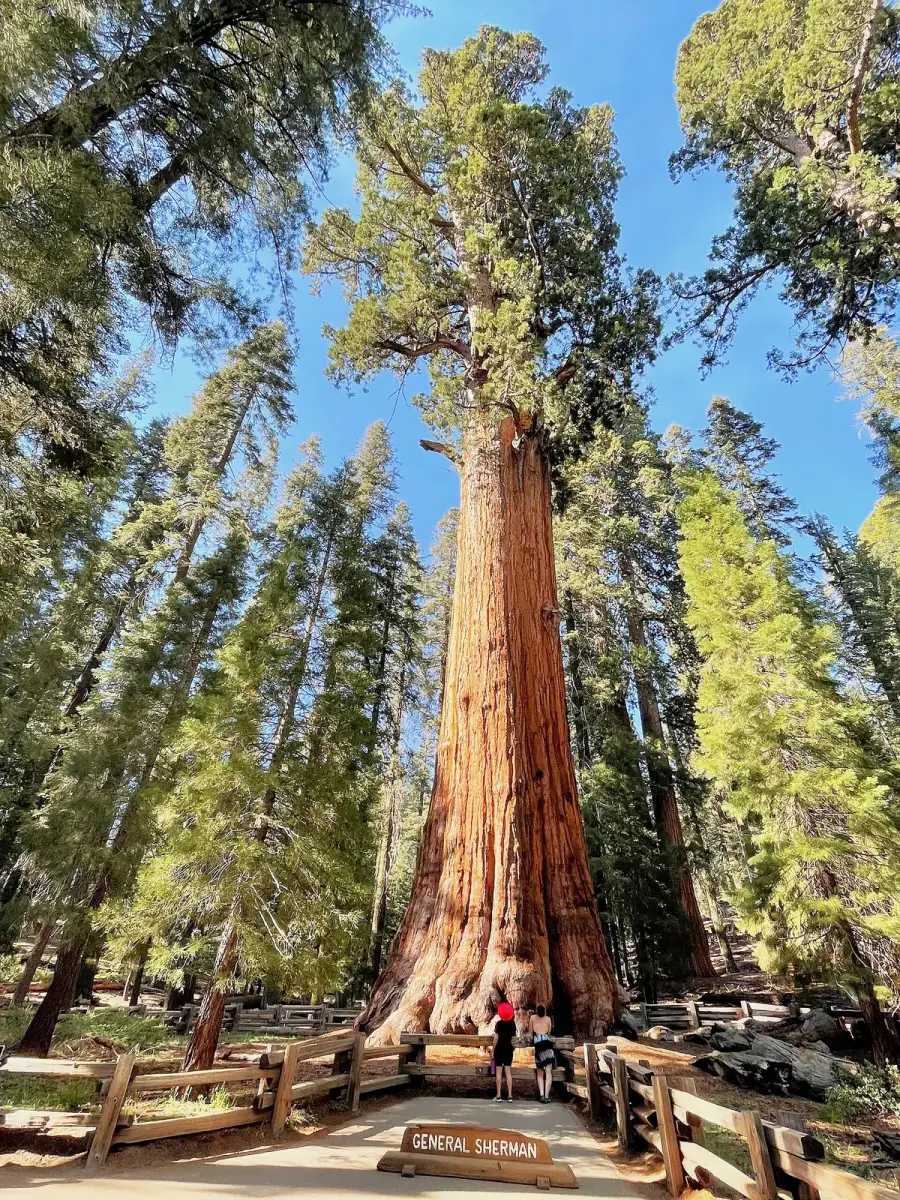 Photo: Marty Aligata, CC BY-SA 4.0

A giant sequoia (Sequoiadendron giganteum) that is the largest known living single-stem tree by volume: about 52,500 cubic feet (1,487 cubic meters). Not the tallest (that is Hyperion, a coast redwood at 380.3 feet), not the oldest, not the widest—but the biggest.
What makes it remarkable: The statistics don’t help. You have to stand at the base, then back away, then back away further, before your brain accepts that this is a single organism. The tree adds about 40 cubic feet of wood a year—roughly one full-sized ordinary tree, annually, as a rounding error.
Visiting: Accessible via a paved, wheelchair-accessible trail from the parking area. Crowded in summer. Best experienced at sunrise when few people are there.
Sunland Baobab — Formerly Limpopo, South Africa
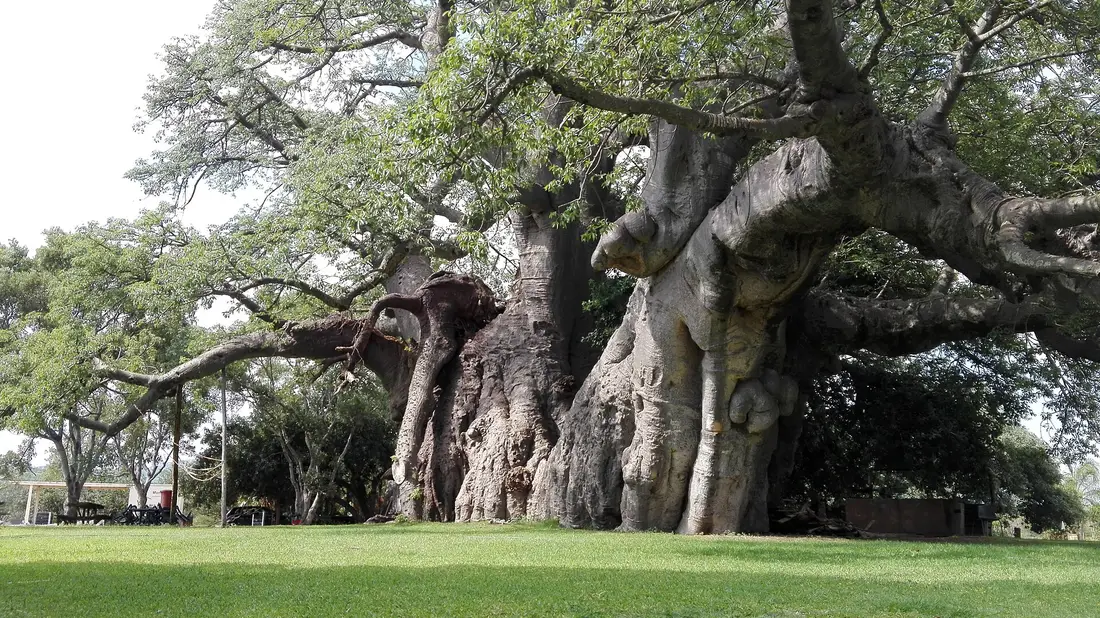 The Sunland Baobab in February 2016, months before its first collapse. Photo: JTeessen, CC BY-SA 4.0

A baobab (Adansonia digitata) near Modjadjiskloof with a bar inside its hollow trunk, seating 15. The trunk was 47 meters around. In 2016 and 2017 the tree collapsed in sections and died. Many of Africa’s ancient baobabs have died in recent years; researchers suspect a changing climate.
What makes it remarkable: The Sunland Baobab is the modern death of ancient trees in miniature—organisms that outlasted empires failing within a decade. The bar, the visitors, and the foot traffic cannot have helped.
What remains: The remaining trunk sections are fenced. The bar no longer operates.
The Dark Hedges — Northern Ireland
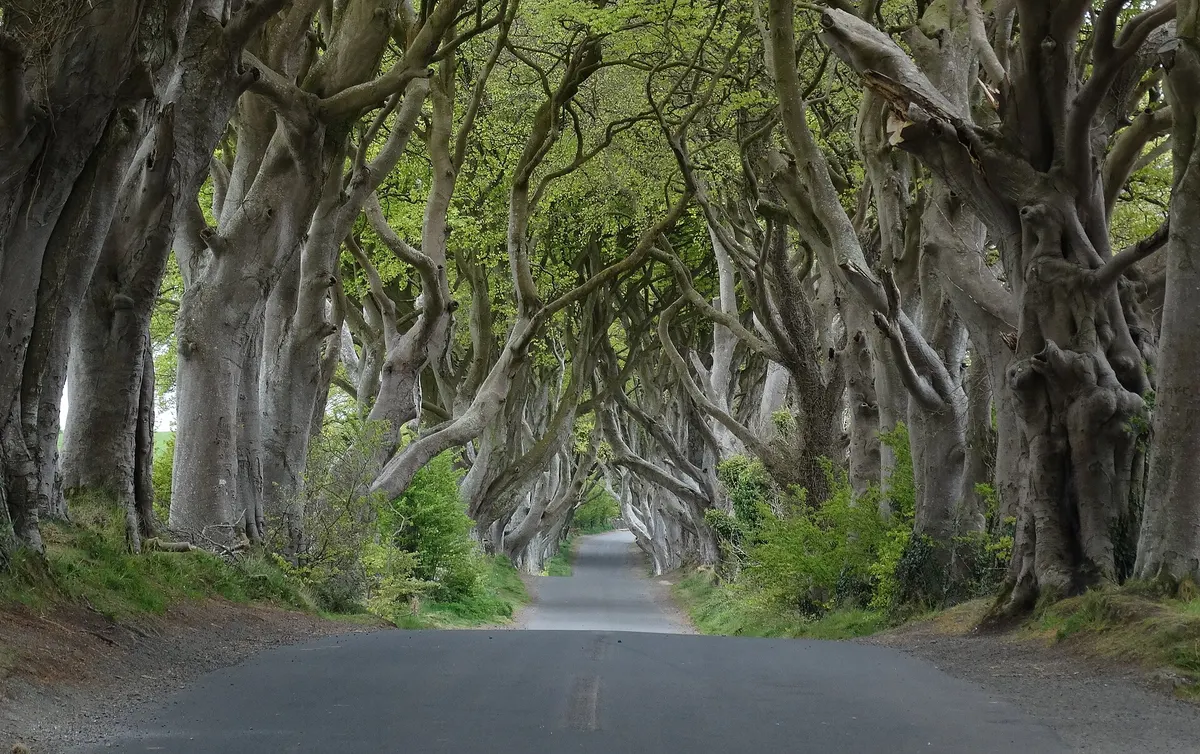 Photo: Colin Park, CC BY-SA 2.0
.jpg)
An avenue of beech trees (Fagus sylvatica) planted in the 18th century by the Stuart family to impress visitors approaching their estate. The trees have intertwined overhead to form a tunnel.
What makes it remarkable: Featured in Game of Thrones as the Kingsroad, the Dark Hedges became globally famous almost overnight. This has not been good for the trees. Traffic increased by 500%. Several trees have been damaged or lost. The surviving trees are under stress.
Visiting: Free. Best photographed at dawn before tourists arrive. The road is now closed to vehicles. Some trees have been fenced to prevent root compaction.
Rainbow Eucalyptus — Philippines, Indonesia, Papua New Guinea
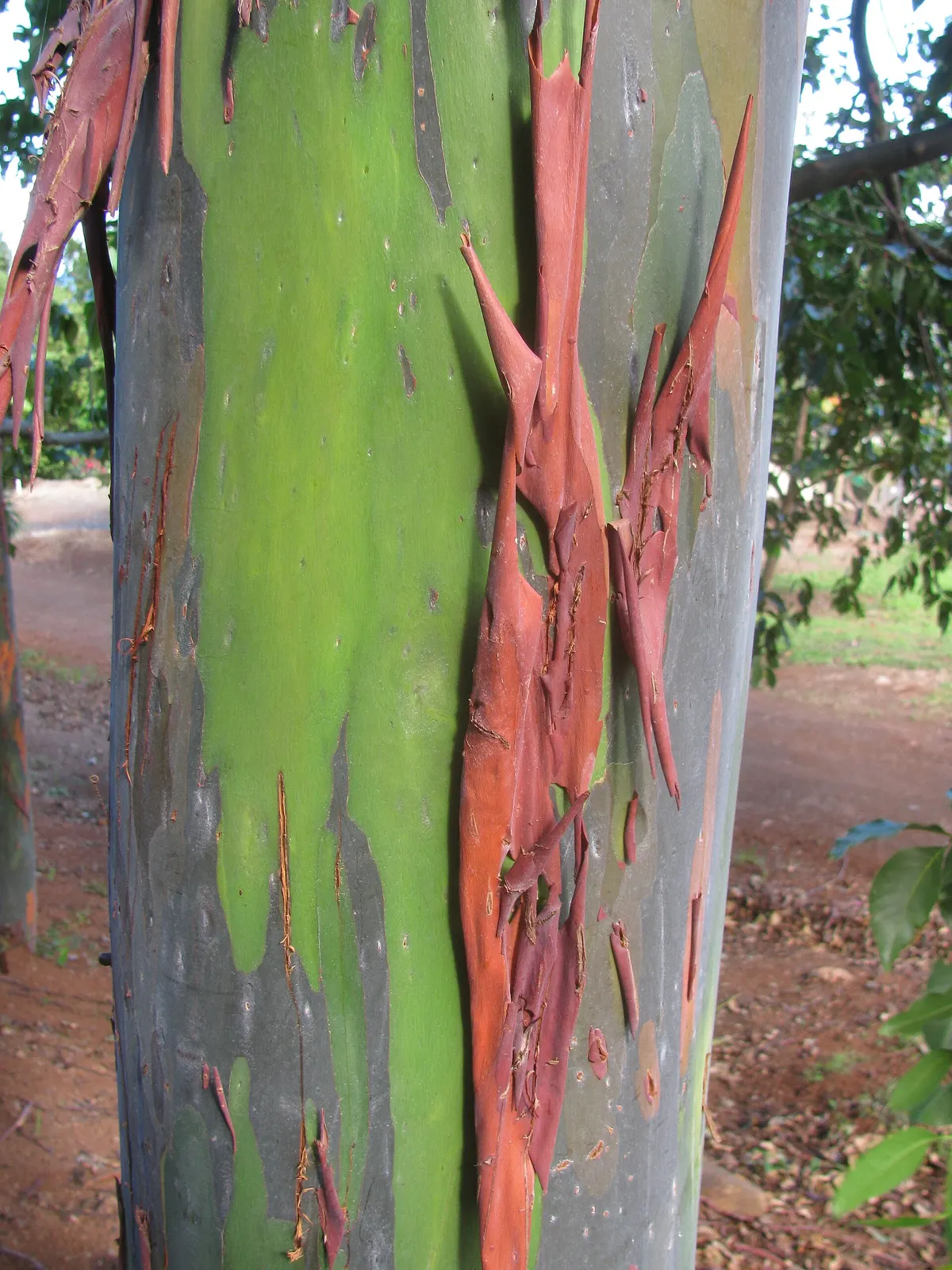 Photo: Forest and Kim Starr, CC BY 3.0 US
.jpg)
Eucalyptus deglupta, the only eucalyptus native to the northern hemisphere. As the tree sheds bark throughout the year, the exposed inner bark displays vivid greens, blues, oranges, and maroons that darken over time before being shed again.
What makes it remarkable: The coloring is natural, not a trick of photography. Different patches of bark are at different stages of aging, creating the rainbow effect. Outside their native range (including planted specimens in Hawaii and California), the colors are often less intense.
Visiting: Specimens in Maui, Hawaii are among the most accessible for North American visitors.
Further Reading
Books
- “The Tree: A Natural History of What Trees Are, How They Live, and Why They Matter” by Colin Tudge
- “The Hidden Life of Trees” by Peter Wohlleben
- “Meetings with Remarkable Trees” by Thomas Pakenham
- “Ancient Trees: Trees That Live for a Thousand Years” by Anna Lewington and Edward Parker
Photography Collections
- “Wise Trees” by Diane Cook and Len Jenshel
- “Old Trees” by Beth Moon
Scientific
- Papers on bristlecone pine dating from the Laboratory of Tree-Ring Research, University of Arizona
- Research on ancient baobab death from Nature Plants (Patrut et al., 2018)
Organizations
- Ancient Tree Forum (UK)
- American Forests (maintains National Big Tree Register)
- Monumental Trees (global database with GPS coordinates)
Comments